

Elevating Rock Mass Stability in 2026: Optimized Ground Support Systems for Underground Mining Operations

Dayang Yang
AuthorWith over 15 years of experience in the production and sales of ground anchoring and mining support products, we operate our own rock bolt and accessory manufacturing facility with stable large-scale production capacity. We are specialists in rock bolts, resin cartridges, anchor cables, bearing plates, and customized ground anchoring products for mining support and geotechnical anchoring solutions.
The Critical Need for Advanced Strata Control in 2026 Underground Mining Operations
As underground mining pushes deeper in 2026, the demand for robust strata control has never been higher. Insights from the 2025 AusIMM Underground Operators Conference, where over 1500 professionals identified unplanned downtime from suboptimal ground support as a top pain point, underscore this urgency. Industry projections from Mining Magazine (September 2025) directly link deeper excavations to increased seismic activity, making enhanced seismic resistance a non-negotiable feature for 2026 ground support systems. The core challenges are clear: compromised load bearing capacity from inaccurate tensioning, component failure due to insufficient yield strength, and corrosion-driven degradation. Addressing these is paramount to meeting 2026 safety mandates and protecting operational uptime. For a data-driven approach to these challenges, consider insights from beyond guesswork optimize mine support design with full scale shear test data.
Key Components of a High-Performance Ground Support System
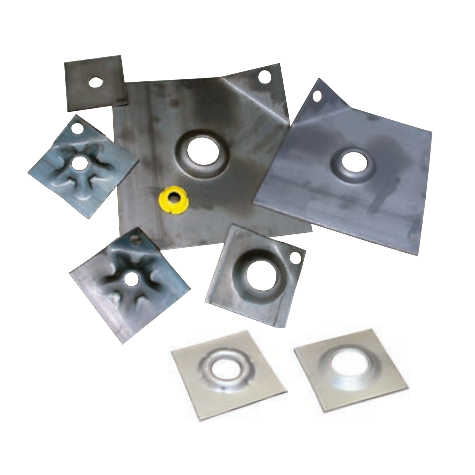
Effective strata control hinges on balancing tensile strength, yield strength, and load bearing capacity. A modern system integrates specialized components to address 2026's harsh conditions. Start with the foundation: strand cable bolts and threaded steel rebar bolts secured with high-strength accessories like a dome plate, spherical washer, and W-strap to maintain tension on angular surfaces. For anchoring, resin cartridges or chemical anchor bolts provide immediate hold, while injection grout or quick-setting mortar is used with hollow grouting bolts for long-term bond strength. Surface support is critical; steel wire mesh, including welded wire mesh and chain link mesh, offers essential shotcrete reinforcement. For complete system integrity, rely on a comprehensive range of Rocbolt accessories—from couplers and hex nuts to dome nuts—all engineered for certified high yield strength. The prestressing anchorage system further boosts load bearing capacity for cable bolts in high-stress zones.
Real-World ROI: How Mining Operations Optimized Stability with Rocbolt Solutions
The proof is in performance. A 2025 case study from a Western Australian gold mine documented a 32% reduction in unplanned downtime after implementing Rocbolt tensioning equipment and accessories, achieving a 28% increase in rock mass stability in six months. The ROI was clear: $1.2M in annual savings from reduced maintenance and extended roadway life, with equipment payback in 8 months. Validated metrics showed improved component yield strength, a 15% increase in anchored strata tensile strength, and enhanced seismic resistance during minor tremors. This mirrors the efficiency gains seen in smart anchoring systems enable 33 trade growth automated factories, where precision engineering drives tangible returns.
2026 Buyer’s Guide: Selecting the Right Ground Support Components
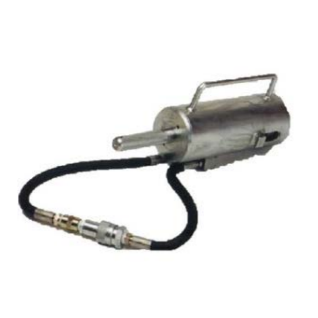
Selecting components for 2026 requires a strategic assessment. First, evaluate your site's seismic activity, corrosion risks, load bearing needs, and installation speed. Prioritize products with proven testing, such as accessories with certified yield strength and tensioning equipment with gauged accuracy. For material compatibility, specify galvanized mining wire mesh for corrosion resistance, Glass Fiber Reinforced Polymer (GFRP) bolts for non-conductive areas, and combo bolts for mixed ground. Don't overlook details: ensure your anchor plate, expansion shell, and sleeve are matched to your bolt type. For specialized needs like T-section steel supports or butterfly plates, consult experts for custom configurations.
Next Steps to Upgrade Your 2026 Ground Support System
To elevate your strata control, begin by downloading detailed datasheets on Rocbolt components to review tensile and yield strength specifications. Request an on-site demo of Rocbolt tensioning equipment to see accurate pre-loading in action. Schedule a consultation to design a system integrating pipe seam anchors, mining wire mesh, and prestressing anchorages tailored to your 2026 goals. For model-specific needs like a 290 kN cable cropper or high-strength mining nuts, direct discussion is key. Ready to secure your operation? Contact our team today to start your 2026 ground support upgrade.
Related News
Other news you might be interested in

Resin Anchor Bolt Anchorage Force Formation: Resin Annulus Thickness, Mixing Quality and Interfacial Bonding
A resin anchor bolt is often evaluated as though anchorage were a single number printed on a resin cartridge. In service, anchorage is a load path. The bolt must grip the resin, the resin must remain continuous and sound, the resin must grip the borehole wall, and the rock must accept the load. A weakness anywhere in that chain changes the result, even when every component meets its own specification.

Deep Mining & Long-Service-Life Tunnel Support: Key Factors for Rock Bolt Corrosion Protection and Long-Term Durability
A buyer can receive two quotations for “corrosion-resistant rock bolts” and still be unable to compare them. One may refer to a galvanized bar. Another may include epoxy-coated bars, sealed couplers, protected anchor heads, and a specified grout cover. Both descriptions sound protective, but they do not cover the same parts of the support system or provide the same kind of evidence.
Want to know more?
Get in touch with us for more information about our services and products.