

Maximize Safety and ROI with Advanced Rock Reinforcement Solutions

Dayang Yang
AuthorWith over 15 years of experience in the production and sales of ground anchoring and mining support products, we operate our own rock bolt and accessory manufacturing facility with stable large-scale production capacity. We are specialists in rock bolts, resin cartridges, anchor cables, bearing plates, and customized ground anchoring products for mining support and geotechnical anchoring solutions.
The Growing Challenge of Strata Control in Underground Mining
As strata control challenges intensify, mining operations demand high-performance solutions that boost safety and productivity while reducing costs and risks. The pressure is on to achieve reliable ground support in ever-deeper excavations, and the numbers confirm the urgency: industry analysis projects the rock bolt monitoring systems market to hit $1.12 billion by 2033, with a 14.2% CAGR from 2026 to 2033. For operators, that means the time to act is now. The dual mandate is clear—maximize ROI without compromising rock mass stability, whether in underground roadway reinforcement or shotcrete reinforcement applications. Achieving this demands more than incremental tweaks; it calls for a fundamentally smarter approach to ground support, one that leverages real-time data and advanced materials to preempt failures before they become costly.
Key Innovations in Rock Bolt Technology for 2026 and Beyond
Material science is rewriting what’s possible. Advances in yield strength and tensile strength now deliver bolts that withstand extreme seismic events without sacrificing installability. Glass Fiber Reinforced Polymer (GFRP) bolts are leading the charge, offering corrosion immunity and weight savings that streamline handling, while hollow grouting bolts enable simultaneous drilling and grouting—cutting cycle times dramatically. In aggressive environments, the shift toward chemical anchor bolts with precision resin capsules and resin cartridges is eliminating corrosion-related degradation, and galvanized finishes are proving their value in high-humidity zones. Meanwhile, smart anchoring systems are coming of age: monitoring-ready components like dome plates, spherical washers, and torque-indicating nuts give engineers live visibility into strata control performance. These aren’t lab concepts—they’re field-proven tools that turn ground support from a static install into a data-driven safety system.
How Our Products Deliver Superior Performance
Every element in a ground support system must work in concert. Our mining wire mesh and mine support mesh—available in welded and woven configurations—use high-tensile steel wire mesh with custom coatings to deliver exceptional load bearing capacity for slope support and underground reinforcement. For post-tensioned concrete and geotechnical anchoring, the prestressing anchorage system ensures zero-slip load transfer on strand cable bolts and PT bars, turning theoretical pull-out resistance into field certainty.
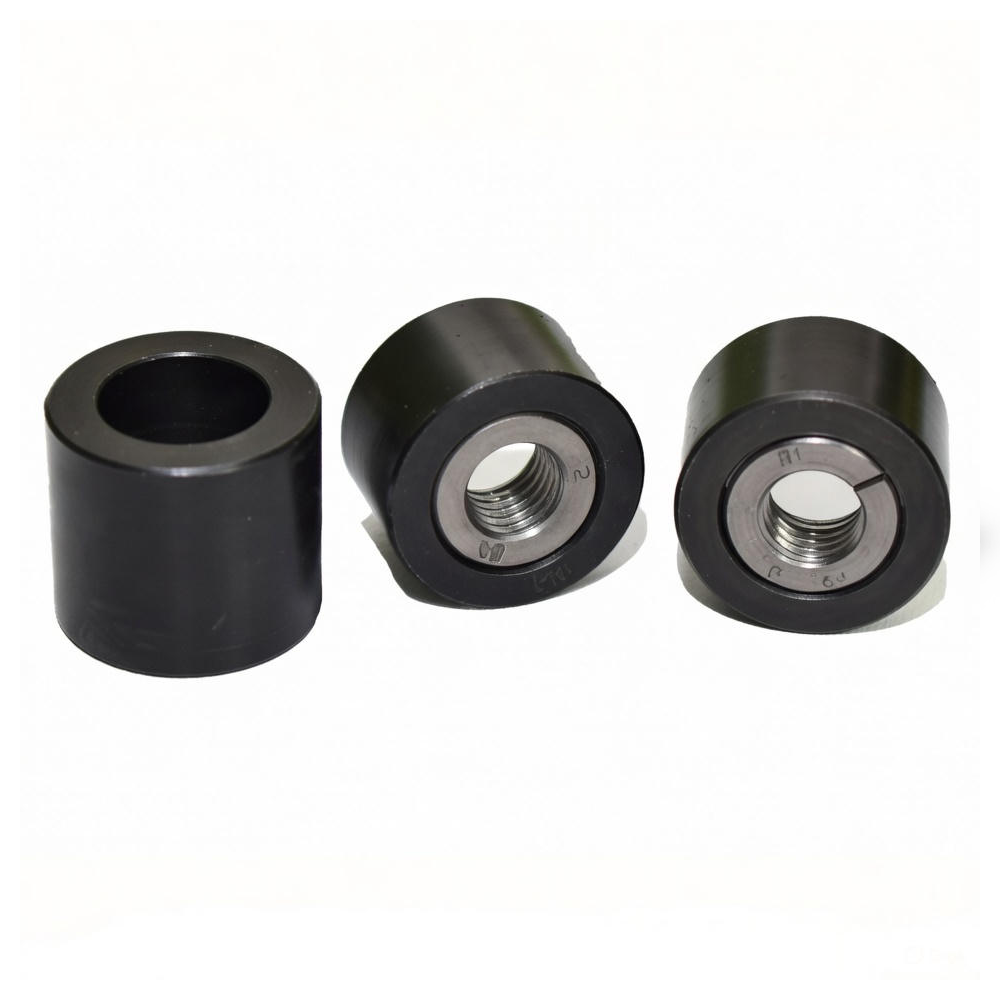
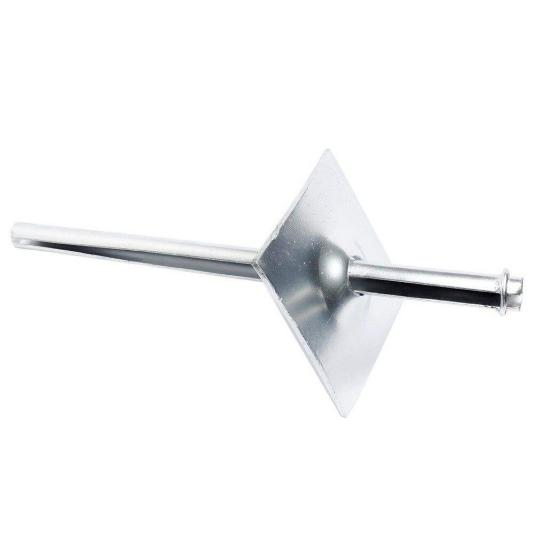
When immediate ground support is non-negotiable, our pipe seam anchors (friction bolts) and friction anchor bolts (Split Set) create full-length radial friction with outstanding pull-out and shear resistance—no cure time, no guesswork. The backbone of any bolting system is its accessories, and we engineer ours to the same standards as the primary anchors. Our rock bolt accessories—including dome nuts, hex nuts, butterfly plates, and couplers—are individually tested for high yield strength and compensate for angular surfaces up to 18°, guaranteeing stable tensioning on uneven faces. For heavy-duty bolted connections, our high-strength mining nuts in custom sizes and coatings are purpose-built for the harshest tunneling and mining conditions.
Real Results: Improved Safety and Cost Savings
Data from active mines confirms the impact. Operators integrating our CT bolts and self-drilling anchors (SDA) have measured up to 14.2% improvement in operational efficiency alongside a 5.87% reduction in total bolting costs. In one underground roadway reinforcement project, pairing resin capsules with quick-setting mortar injection grout eliminated secondary shotcrete reinforcement passes, saving both time and material. Field installations using dome plates, W‑straps, and lattice girders have repeatedly demonstrated a step-change in load bearing capacity and seismic resistance, with rehabilitation needs down sharply over the monitoring period. These outcomes are not accidental; they flow from a systematic design approach validated by full-scale shear test data—a methodology detailed in our guide beyond guesswork: optimize mine support design with full-scale shear test data.
Partner with a Trusted Manufacturer for Your Ground Support Needs
No two strata behave identically, so your ground support shouldn’t either. We supply a complete range—from threaded steel rebar bolts and mechanical expansion shell anchors to chemical anchor bolts, Glass Fiber Reinforced Polymer (GFRP) bolts, and injection grout systems—all tailored to your specific strata control conditions. Our engineering team routinely configures custom solutions combining step rebar bolts, combination bolts, and grout formulations to optimize load transfer and installation speed. Whether your project involves chain link mesh, anchor plates, or T‑section steel reinforcement, we ensure every component meets the same rigorous performance standard.
Ready to optimize your ground support system? Contact our engineering team now for a tailored, field-ready solution that maximizes safety and ROI.
Related News
Other news you might be interested in

Resin Anchor Bolt Anchorage Force Formation: Resin Annulus Thickness, Mixing Quality and Interfacial Bonding
A resin anchor bolt is often evaluated as though anchorage were a single number printed on a resin cartridge. In service, anchorage is a load path. The bolt must grip the resin, the resin must remain continuous and sound, the resin must grip the borehole wall, and the rock must accept the load. A weakness anywhere in that chain changes the result, even when every component meets its own specification.

Deep Mining & Long-Service-Life Tunnel Support: Key Factors for Rock Bolt Corrosion Protection and Long-Term Durability
A buyer can receive two quotations for “corrosion-resistant rock bolts” and still be unable to compare them. One may refer to a galvanized bar. Another may include epoxy-coated bars, sealed couplers, protected anchor heads, and a specified grout cover. Both descriptions sound protective, but they do not cover the same parts of the support system or provide the same kind of evidence.
Want to know more?
Get in touch with us for more information about our services and products.